 English
 lugha ya Kiswahili
  Монгол хэл
  Español
  Português
  русский
  Français
  日本語
日本語  Italiano
  한국어
한국어  Malay
Malay  हिन्दी
  Türkçe
  العربية
  Indonesia
  تمل
تمل  український
  فارسی
فارسی  Latine
  Azərbaycan

What’s Shaping the Roll Forming Machine Industry in 2026? Smart Technology and Green Manufacturing Lead the Way
As a highly efficient continuous metal forming process, roll forming technology is the core production method for manufacturing long metal profiles such as roofing sheets, purlins, floor decks, solar mounting structures and automotive structural parts. Entering 2026, with the accelerated implementation of Industry 4.0 concepts and the continuous tightening of global carbon emission requirements, the roll forming equipment industry is shifting from the traditional pursuit of simply increasing speed and output to a high-quality development stage focusing on precision, intelligence, energy saving and flexible production. The upgrading of downstream application scenarios is also forcing equipment manufacturers to continuously iterate their technologies.
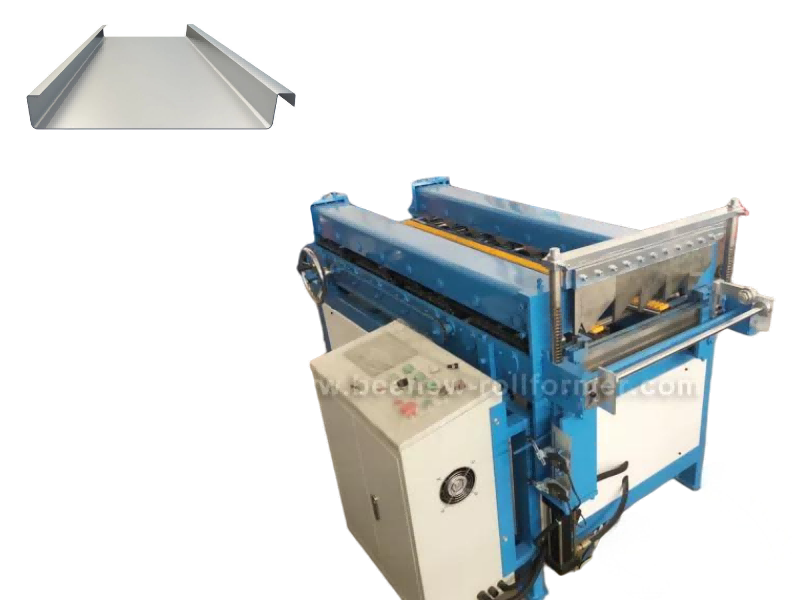
1. Core Technology Iteration: Intelligence, High Efficiency and Flexible Production
In 2026, the technical competition of roll forming machines is no longer limited to the number of forming stations and operating speed, but extends to the full dimensions of control system, transmission structure and production management. Three major technological trends are reshaping the product standards of the industry.
Intelligent digital control becomes standard configuration for high-end models. The new generation of roll forming lines is generally equipped with PLC + touch screen control system, and high-end models are further integrated with AI adaptive algorithm and IoT Internet of Things module. The system can automatically adjust roller gap and line speed according to the differences of material thickness and hardness per coil, solving the traditional problem of "re-adjusting parameters for every coil change", and shortening the setup time from 30–60 minutes to less than 5 minutes. At the same time, the built-in sensors monitor partial discharge, wear and vibration status in real time, realizing predictive maintenance, which can reduce unplanned downtime by about 41% on average according to industry statistics. The production data can also be interconnected with the factory MES and ERP systems to realize full batch traceability of every meter of profile, which is especially important for large-scale projects with strict quality requirements such as utility-scale solar power plants.
Servo direct drive technology replaces traditional hydraulic systems on a large scale. More and more new machines adopt high-efficiency servo motors as the main power. Compared with the traditional hydraulic drive mode, the servo direct drive structure has faster torque response, and the positioning accuracy can reach ±0.1mm even at a forming speed of more than 60 meters per minute. More importantly, the servo system can save about 22% of electric energy consumption on average, and at the same time avoids the problems of oil leakage and noise of hydraulic stations, which significantly improves the workshop environment and meets the requirements of green manufacturing. Industry data shows that the scrap rate of production lines equipped with closed-loop servo control can be reduced from 4.2% to 1.1%, greatly improving material utilization rate.
Modular integrated design improves production flexibility. In response to the market demand of multiple varieties and small batches, modern roll forming lines adopt highly integrated front-end units, which combine decoiler, leveler and feeder into a 3-in-1 integrated mechanism, which not only saves the floor space, but also ensures constant material tension throughout the process. The quick-change roll tooling design enables users to switch between different profile specifications within a few hours, effectively solving the production scheduling problem of multi-specification and multi-batch orders, and improving the equipment utilization rate of small and medium-sized processing enterprises.
2. Downstream Demand Engine: Renewable Energy and Prefabricated Construction
The sustained growth of the roll forming equipment market benefits from the simultaneous explosion of multiple downstream application fields, among which the renewable energy sector and the prefabricated construction sector are the two core growth engines with the strongest momentum.
Renewable energy infrastructure drives specialized equipment demand. With the large-scale construction of global photovoltaic and wind power projects, the demand for metal supporting structures has increased sharply. Special roll forming lines for solar mounting brackets have become the most popular product segment in the market, and about 30% of new machine R&D projects in the industry are focused on energy-related profiles such as photovoltaic brackets and energy storage cabinet frames. Such equipment usually requires high-speed continuous production, supports online punching and notching processes, and can adapt to the mass production demand of galvanized steel and aluminum alloy profiles. Industry research shows that the demand for roll forming equipment in the renewable energy sector will maintain a compound annual growth rate of about 8.2% in the next five years, becoming the fastest growing subdivision track.
Prefabricated construction pulls steel structure profile equipment. The global modular construction market is growing at a rate of 6.8% per year, and prefabricated factories have a strong demand for high-efficiency cold-bending forming equipment for producing light steel keels, C/Z purlins, floor bearing plates and wallboard profiles. Compared with traditional welding and bending processes, roll forming has higher production efficiency and more stable product consistency, which can well meet the standardized and batch production requirements of prefabricated building components. In emerging market regions represented by Southeast Asia and India, the rapid advancement of urbanization and industrial construction has also maintained a strong demand for conventional roof panel and wall panel roll forming machines.
3. Material Upgrading Brings New Technical Challenges
The widespread application of advanced high-strength steel (AHSS) and lightweight aluminum alloy materials has put forward higher requirements for the rigidity, forming pass number and transmission torque of roll forming equipment, which is also an important direction of current industry technology research and development.
Processing high-strength steel requires higher forming force. According to production experience, compared with ordinary mild steel of the same thickness, processing AHSS materials usually needs to increase 20%–30% more forming stations, and the frame structure must have stronger bending resistance to avoid deflection deformation during high-pressure forming. At the same time, the drive system needs to be equipped with a higher torque motor and more precise speed synchronization control to prevent strip tearing or material stacking between frames. For aluminum alloy profiles, because the material is softer and easier to scratch, higher requirements are put forward for the surface finish and lubrication system of the roller die, and water-based environmentally friendly lubricants are gradually replacing traditional petroleum-based cooling fluids to meet the clean production requirements.
4. Market Pattern and Future Development Outlook
From the perspective of regional market structure, the Asia-Pacific region, led by China, India and Southeast Asia, is the largest consumer market for roll forming equipment, supported by strong infrastructure construction and manufacturing transfer. The European and American markets are dominated by equipment renewal and upgrading, with higher requirements for intelligence, energy efficiency and automation level, and the demand for high-end customized production lines is strong.
Looking forward to the next 3–5 years, the roll forming machine industry will continue to develop in the direction of intelligence, green and low carbon, and service-oriented. On the one hand, generative AI will be more deeply involved in the profile design and roller configuration process, shortening the product development cycle; on the other hand, the business model of equipment manufacturers will gradually extend from simple equipment sales to turnkey engineering and equipment-as-a-service (EaaS), providing customers with full life cycle technical support and maintenance services. Enterprises with core independent research and development capabilities, complete product series and perfect after-sales service system will occupy a more favorable position in the future competition.
Conclusion
2026 is a key year for the roll forming machine industry to move towards high-end intelligent manufacturing. The dual drive of technological innovation and downstream demand upgrading promotes the continuous evolution of equipment performance and application value. For manufacturing enterprises, choosing a roll forming production line with intelligent control, high-efficiency energy saving and flexible production capacity is not only to cope with the current production demand, but also to build core competitiveness for adapting to the future green and digital manufacturing transformation.
Disclaimer: This article is for industry trend analysis and technical reference only. The relevant data and technical descriptions are compiled based on public industry standards and market research materials. For specific equipment selection and engineering applications, please refer to the official technical parameters and professional solutions provided by the manufacturer.
Send Inquiry



X
We use cookies to offer you a better browsing experience, analyze site traffic and personalize content. By using this site, you agree to our use of cookies.
Privacy Policy