Article Summary
A standing seam machine is a critical piece of equipment in modern metal roofing production. It is widely used to form concealed-fastener roofing panels that offer superior durability, weather resistance, and aesthetic appeal. This article explains how a standing seam machine works, its advantages, common challenges users face, and how to select the right machine for long-term efficiency and cost savings. Whether you are a contractor, distributor, or manufacturer, understanding this equipment can significantly improve your production quality and business performance.
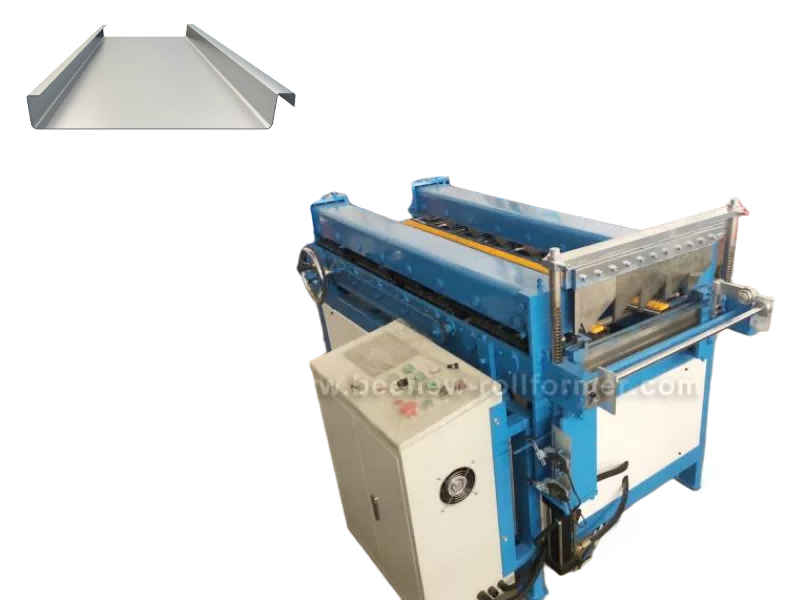
1. Overview of Standing Seam Machine
A standing seam machine is designed to manufacture metal roofing panels with raised seams that interlock during installation. These seams conceal fasteners, which enhances waterproofing and extends roof lifespan. The system is widely adopted in commercial, industrial, and residential roofing projects due to its structural strength and modern appearance.
Unlike traditional exposed fastener systems, standing seam panels are formed through a continuous roll-forming process. This ensures uniformity, precision, and reduced installation errors.
2. How the Machine Works
The working principle of a standing seam machine is based on roll forming technology. Metal coils are fed into the machine and gradually shaped through multiple roller stations until the final profile is achieved.
-
Step 1: Metal coil feeding system loads raw material
-
Step 2: Leveling unit ensures flat and stable sheet surface
-
Step 3: Roll forming stations shape the standing seam profile
-
Step 4: Cutting system trims panels to required length
-
Step 5: Output system stacks finished panels for packaging
This automated process reduces manual labor and increases production consistency, making it ideal for large-scale roofing projects.
3. Key Benefits in Roofing Production
Using a standing seam machine provides multiple advantages that directly impact production efficiency and product quality.
-
High Durability: Panels resist harsh weather conditions and corrosion.
-
Leak Resistance: Hidden fasteners minimize water penetration risks.
-
Energy Efficiency: Reflective metal surfaces reduce heat absorption.
-
Design Flexibility: Suitable for modern architectural structures.
-
Reduced Installation Time: Prefabricated panels simplify on-site assembly.
4. Common Customer Pain Points
Many users encounter challenges when working with low-quality or improperly configured machines. These issues can lead to production inefficiencies and financial loss.
-
Inconsistent panel dimensions causing installation errors
-
Frequent machine breakdowns due to poor component quality
-
High maintenance costs and downtime
-
Limited material compatibility
-
Difficulty in operator training and machine control
Addressing these issues requires investing in a well-engineered system and choosing a reliable supplier with strong technical support.
5. How to Choose the Right Machine
Selecting the right standing seam machine depends on production requirements, material types, and long-term operational goals.
-
Material Compatibility: Ensure it supports steel, aluminum, or copper coils.
-
Production Speed: Match machine output with project demand.
-
Automation Level: Choose between semi-automatic or fully automatic systems.
-
Control System: PLC control improves precision and ease of use.
-
After-sales Support: Technical support ensures long-term reliability.
6. Technical Comparison Table
|
Feature
|
Basic Machine
|
Advanced Standing Seam Machine
|
|
Production Speed
|
Moderate
|
High and stable
|
|
Automation Level
|
Semi-automatic
|
Fully automatic
|
|
Precision
|
Average
|
High precision control
|
|
Maintenance Cost
|
Higher long-term cost
|
Optimized and lower
|
|
Material Flexibility
|
Limited
|
Wide compatibility
|
7. Maintenance and Operational Tips
Proper maintenance ensures long-term performance and reduces unexpected downtime. Operators should follow standardized maintenance routines.
-
Regular lubrication of roller components
-
Routine inspection of cutting blades
-
Calibration of control systems
-
Cleaning of metal debris after operation
-
Scheduled replacement of wear parts
Training operators properly also plays a crucial role in maintaining machine efficiency and reducing operational risks.
8. Frequently Asked Questions
Q1: What materials can a standing seam machine process?
It can process galvanized steel, aluminum, copper, and other coated metal coils depending on configuration.
Q2: Is it suitable for small businesses?
Yes, there are compact models designed for small to medium-scale production.
Q3: How long does installation take?
Typically, installation and commissioning can be completed within a few days depending on setup complexity.
Q4: What is the lifespan of the machine?
With proper maintenance, a high-quality machine can operate efficiently for over 10–15 years.
Q5: Can it be customized?
Yes, machines can be customized based on panel profiles and production requirements.
Conclusion
A standing seam machine plays a vital role in modern roofing manufacturing by improving efficiency, precision, and product durability. Businesses that invest in advanced equipment can significantly reduce operational costs while improving output quality.
Xiamen Beenew specializes in high-performance roll forming solutions designed for global roofing industries. If you are looking for a reliable partner to upgrade your production line, contact us today for professional guidance and tailored solutions. contact us to get started with the right standing seam machine for your business.
 English
 lugha ya Kiswahili
  Монгол хэл
  Español
  Português
  русский
  Français
  日本語
日本語  Italiano
  한국어
한국어  Malay
Malay  हिन्दी
  Türkçe
  العربية
  Indonesia
  تمل
تمل  український
  فارسی
فارسی  Latine
  Azərbaycan